%20Strategy%20(7).png)

Low-impact care centre built with offsite efficiency and sensitive design
A SIPs-constructed care facility designed to overcome complex ground conditions while supporting energy efficiency, wellbeing, and rapid delivery.

%20Strategy%20(7)_edited.png)
Offsite SIPs construction
Low-waste assembly
Optimised foundation design
Designing for this kind of environment meant thinking about more than just structural performance - it was about supporting wellbeing too. Using SIPs allowed us to reduce disruption on site and improve energy efficiency, which made a real difference to how the spaces feel and function. It’s a project I’m proud of because it shows how sustainability can genuinely support care-focused design.
Antony Ronaldson
Structural Engineer
Low-impact care centre built with offsite efficiency and sensitive design
%20Strategy%20(1)_edited.png)
Offsite SIPs construction
Low-waste assembly
Optimised foundation design
Engineer:
%20Strategy%20(8).png)
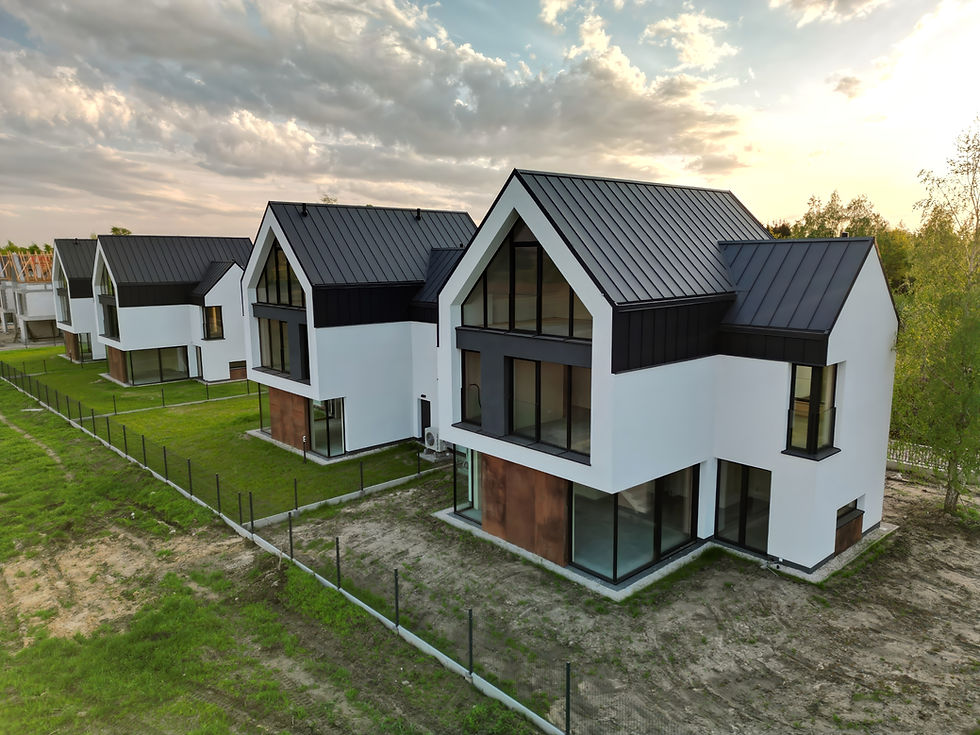
The Forge Care Centre demonstrates how sustainable construction methods can go hand-in-hand with complex engineering and care-focused design.
Faced with challenging ground conditions due to historic coal seams and made ground, our team designed a bespoke foundation solution that ensured structural stability and long-term performance for the four new residential care buildings.
Above ground, the buildings were constructed using Structural Insulated Panels (SIPs) - enabling fast, low-waste assembly and enhanced energy performance. The offsite fabrication of these panels significantly reduced on-site disruption, helping to maintain a calm environment throughout delivery.
Clad in natural timber and zinc, the buildings sit comfortably within a landscaped setting, supporting both visual harmony and the therapeutic aims of the scheme. This project reflects REFEA’s values of designing sustainably for both people and place.


Focus Areas
REFEA’s work is guided by six core principles that drive sustainable structural and civil engineering - turning practical design decisions into low-carbon outcomes across East Anglia.
Reuse First
Prioritising existing structures and materials to reduce waste and embodied carbon.
Early Design Collaboration
Involving engineers early to embed sustainability from concept to construction.

Low-Carbon Materials
Specifying materials with lower embodied carbon and designing for material efficiency.

Circular Design Thinking
Designing for adaptability, longevity, and future reuse from the outset.
%20Strategy%20(3)-min.png)
Integrated Drainage Solutions
Embedding SuDS into civil engineering for sustainable, climate-resilient developments.

Practical Sustainability
Delivering buildable, cost-conscious solutions that meet real environmental targets.

Sustainable
structures
east anglia
As structural engineers, we have a unique opportunity to influence how the built environment responds to the climate crisis. Reuse isn't just about saving materials - it's about rethinking value, preserving what works, and designing with long-term resilience in mind. Through REFEA, we hope to make reuse a more practical and achievable option on projects across East Anglia by sharing knowledge, highlighting viable approaches, and supporting early-stage design decisions.
Mark Weston
Structural Engineer, JMS Engineers
Knowledge is key to sustainable change. Explore our latest insights and technical resources:


Path to a Low-Carbon Built Environment
The built environment contributes nearly 40% of global carbon emissions, much of it through construction and materials. In East Anglia, reducing embodied carbon is critical to meeting sustainability goals. By reusing structures, designing efficiently, and integrating low-impact civil solutions, we can reshape how the region builds - and lead the way towards a net zero future.